
Background
The Infrastructure Climate Resilient Fund (ICRF) is a targeted private equity vehicle led by the Africa Finance Corporation and managed by its subsidiary, AFC Capital Partners. Aimed at addressing Africa's severe climate finance gap, the fund is valued at US$750 million. It focuses on climate-proofing infrastructure like roads, rail, telecommunications, ports, and renewable energy to withstand extreme weather.

Problem
“The core problem is not a lack of capital or opportunity alone; it is the friction between them.”
Climate-resilient infrastructure projects across Africa often struggle to move from ambition to investment. The opportunity is enormous, but the market is fragmented. Project information is held in different formats, readiness levels are difficult to compare, and financiers, suppliers, and project owners often lack a shared view of what is actually needed to move a project forward.
For project proponents, this can mean slow access to the right capital, unclear expectations from investors, and repeated effort preparing information for different audiences. For financiers, it creates a high-friction discovery process, where identifying credible, investment-ready opportunities takes too long. For suppliers and technical partners, it can be difficult to find relevant projects early enough to add value.
The result is a market where good projects can remain invisible, promising opportunities lose momentum, and funding conversations start later than they should.
The ICRF Platform addresses this by creating a structured digital environment where projects, financiers, suppliers, and knowledge resources can be organised around common data standards. By making information more consistent, searchable, and comparable, the platform reduces cognitive load for users and helps shorten the lead time between opportunity discovery, assessment, and engagement.
It turns a fragmented ecosystem into a more navigable market.
Solution
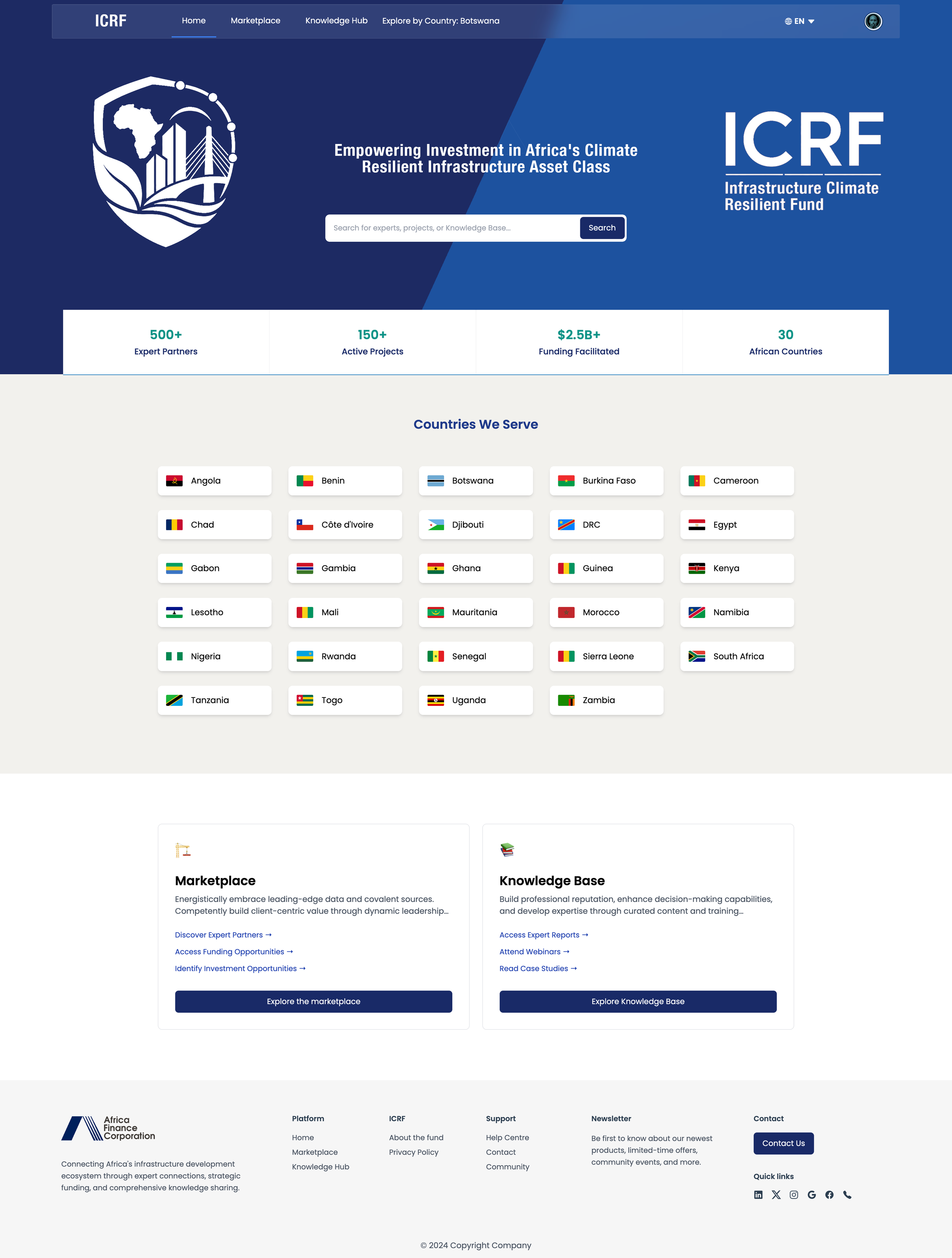
The ICRF Platform was designed to accelerate climate-resilient infrastructure investment across Africa by bringing projects, financiers, suppliers, and knowledge into one coherent digital ecosystem. Its goal is to reduce fragmentation in the market, make project information easier to understand and compare, and shorten the path from opportunity discovery to funding conversations.
By creating a first-of-its-kind marketplace for this sector, the platform introduces a more transparent, structured, and searchable way for users to navigate infrastructure opportunities. Standardised project and profile formats reduce cognitive load, allowing users to compare opportunities, capabilities, and mandates quickly without having to interpret inconsistent documents, fragmented data, or unclear eligibility criteria.
Marketplace
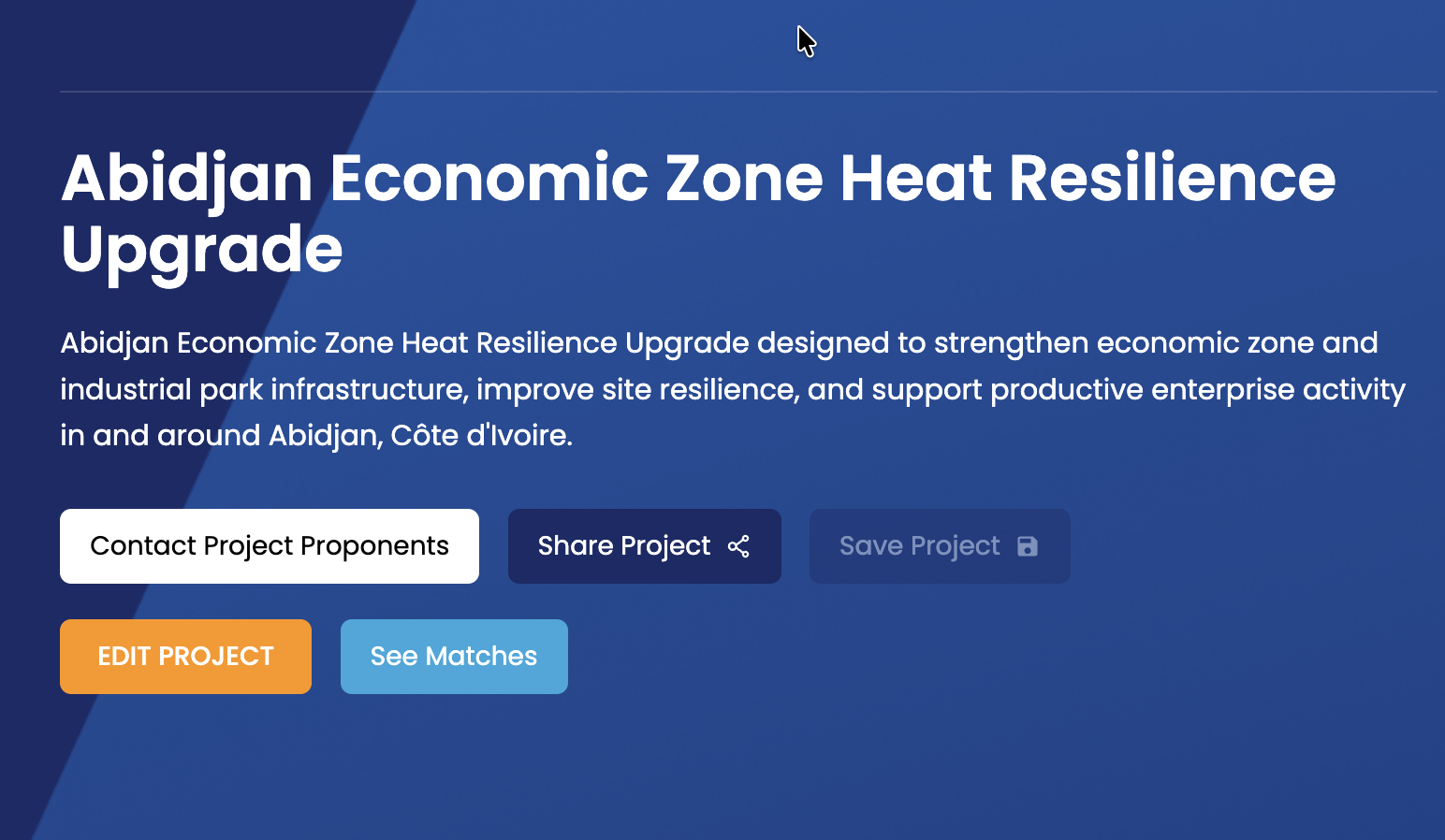
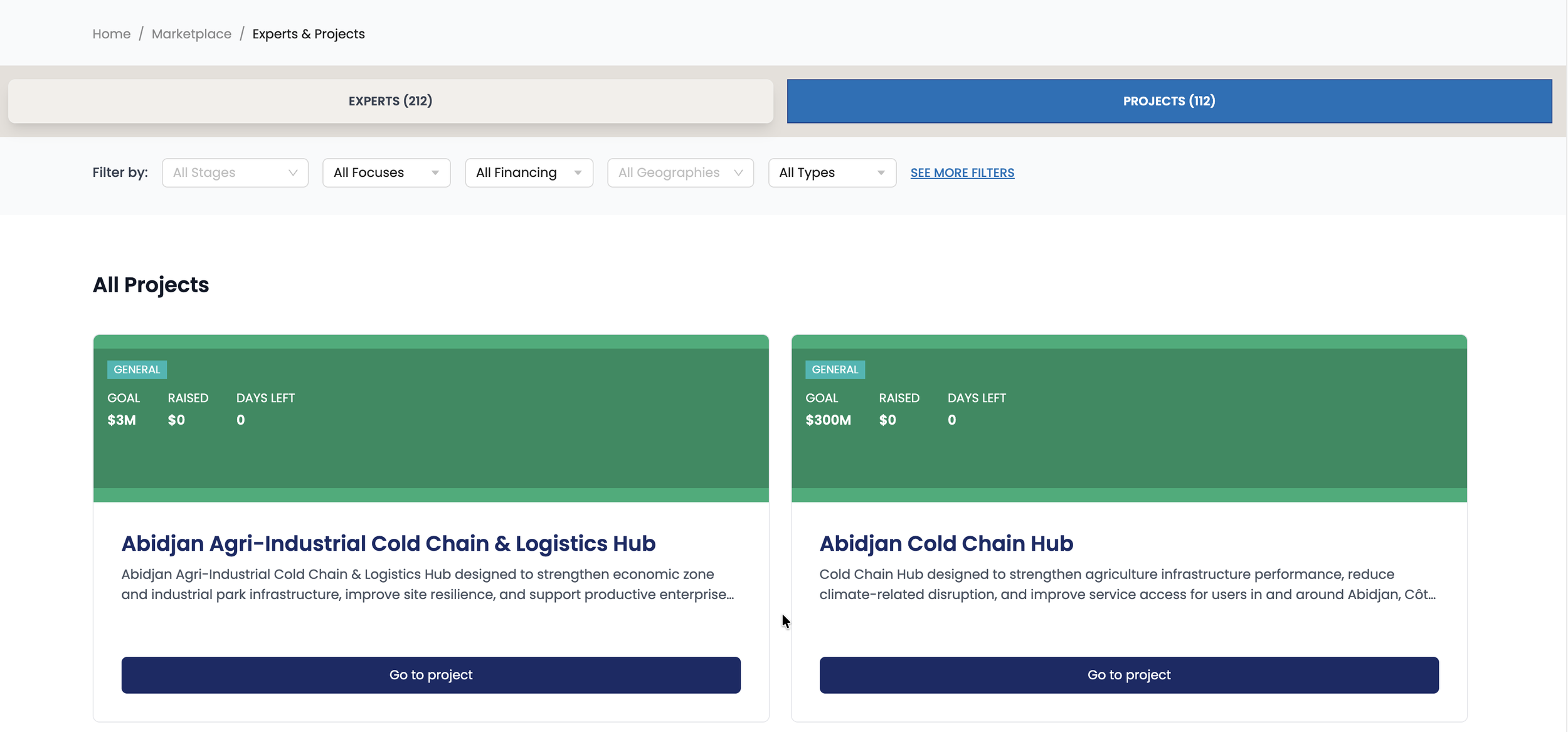
The marketplace connects project proponents, financiers, and suppliers through a shared framework of structured profiles and project records. Each listing is designed around consistent fields, clear readiness indicators, sector classifications, geography, financing needs, and delivery capabilities, making it easier for users to identify relevant opportunities and partners.
This uniformity helps reduce the time wasted in early-stage discovery. Instead of starting every conversation from scratch, users can understand fit faster, assess whether an opportunity matches their mandate, and move more confidently towards engagement.
Matchmaking Engine
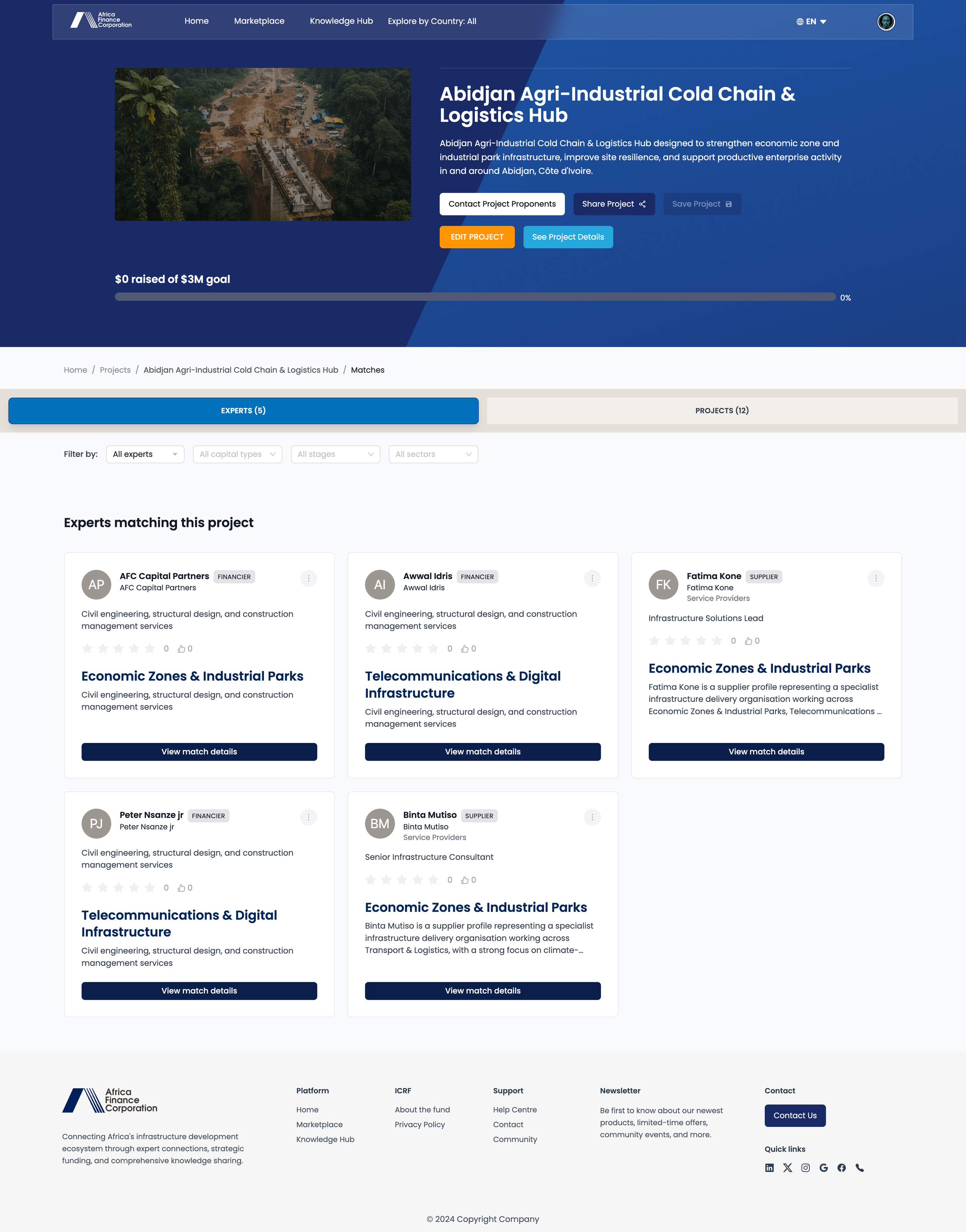
At the heart of the platform is a matchmaking engine that helps users identify the most relevant projects, financiers, and suppliers based on structured data rather than guesswork. The engine compares key fields such as sector, geography, project stage, ticket size, financing type, service capability, climate and ESG expertise, and delivery model fit.
This creates clearer pathways between demand and supply. Project proponents can find suitable capital and delivery partners faster. Financiers can focus on opportunities that match their mandate. Suppliers can identify projects where their capabilities are genuinely relevant.
The result is a reduction in lead time to funding and partnership discussions, driven by transparency, clarity, and better information architecture.
Outcomes
Trust and credibility: verified profiles, clearer project readiness, and more confidence in who users are engaging with.
Investment readiness: helping project owners understand what financiers need before a project is fundable.
Market intelligence: showing patterns across sectors, countries, funding gaps, and supplier capability.
Scalability: a structure that can grow across countries, sectors, and user types without becoming chaotic.
Climate resilience as a filter, not an afterthought: making resilience visible in the way projects are presented, assessed, and matched.