P/05 · Back to projects
Burberry
Burberry World
Designing the ERP behind a global luxury brand — one platform for retail sites, employee tools and supplier portals.

Client
Burberry
Platform
Salesforce ERP
Output
Atomic design system
Sector
Luxury retail
01 — Background
Standardisation, taken seriously.
Christopher Bailey, Burberry's creative director, was standardising across the organisation. A meticulous stickler for detail, he held that every touch point where a stakeholder meets the brand should be very Burberry.
That ran from the uniform hair colour and clothing of the receptionists at the London headquarters to the absence of waste paper bins on the floors — rubbish went into a slot in the wall at the end of the room. No messiness allowed.
The same conformity was wanted across every digital touch point.

The brief, in three words
Every touch point had to be very Burberry.
Including the ones nobody outside the company would ever see.
02 — Problem
Three separate worlds, and a new ERP arriving.
Burberry ran one platform for retail digital channels, a different platform for internal channels, and suppliers had a myriad of ways to transact with the business.
Added to that was the decision to adopt Salesforce as an ERP across the whole organisation.
What Burberry needed was finessed user experience design to tie these journeys together — and out of it, a very Burberry look-and-feel interface system would have to be born.
Channels to unify


03 — Solution
Burberry World: everything you need from Burberry, in one place.
We worked with in-house developers and with Salesforce to understand exactly how the system's capabilities could serve the needs we had uncovered through stakeholder interviews and research.
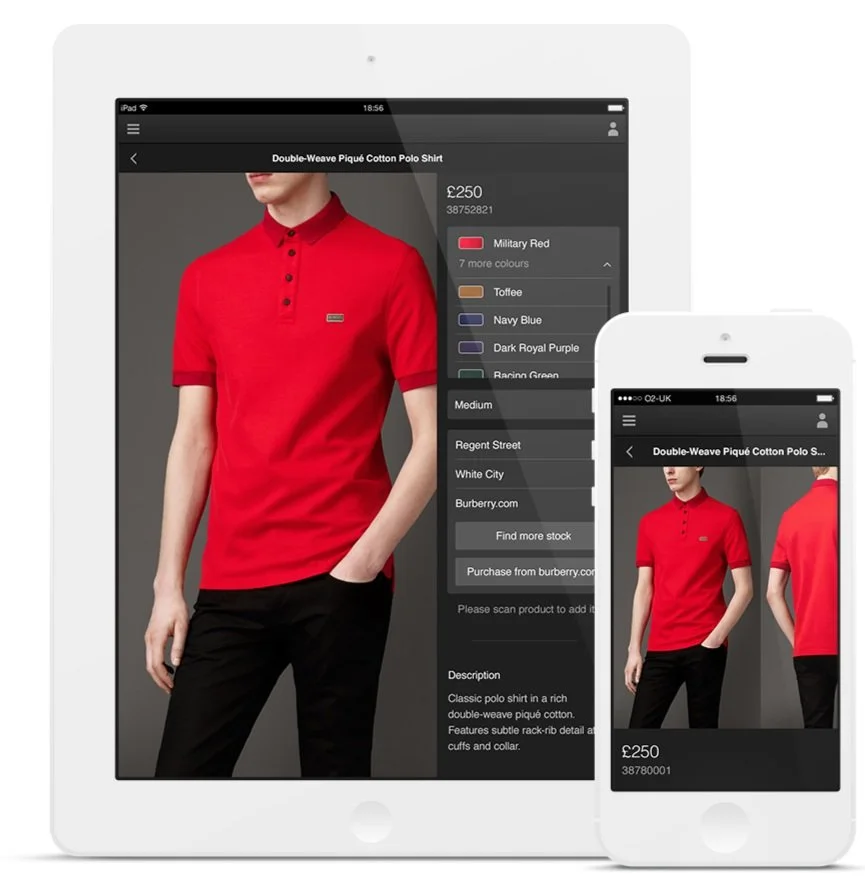
We then built an atomic design system, so that different interfaces could be developed quickly while adhering meticulously to a stringent design language.
Following our documented guidelines, teams of product owners, managers and developers assembled their own regions of the Burberry World ecosystem. The rest is history.

04 — Impact
A single source of truth.
The vision for uniformity produced strategic benefits well beyond consistency. It became straightforward for customers, staff, suppliers and every other stakeholder to remember where to go for what they needed — there was only one platform.
Efficacy
People could get the job done, because there was no longer a question of which system the job lived in.
Efficiency
And they could do it faster and better, working in one consistent design language rather than three.
Management Information
Fast collection of event data made what was happening across the ecosystem visible, with historical data readily available.
Business Intelligence
The same data could be used to model future scenarios and plan for desired outcomes.
Contact